


Want to make your workspace more inviting? Adding plants can freshen up the space, reduce stress, and improve air quality.
The trick is choosing low-maintenance plants that thrive in office conditions. In this guide, I’ll share plant options that fit any workspace, plus tips for keeping them healthy without the hassle.
Office Plants Ideas

#1 Bright Corner Workspace With Vibrant Green Office Plants
A bright corner workspace filled with natural light makes for an inviting home office. Adding a hanging planter with vibrant green vines brings life to the area. You might also consider smaller potted plants on your desk to enhance the home decor. These touches create a refreshing atmosphere that boosts productivity. To keep the space feeling cohesive, choose ceramic and glass materials that complement each other. A circular base for decorative elements can unify the design, creating a serene aesthetic. With the right office plants ideas, your workspace can transform into a vibrant green space.

#2 Clear Glass Vase With Green Branches Enhancing Your Office Space
A clear glass vase filled with slender branches and green leaves instantly brings life to any space. I find that incorporating office plants is a great way to enhance your workspace. They not only purify the air but also create a calming atmosphere, making your office feel more inviting and productive. Consider adding a peace lily or a snake plant for low-maintenance options. These plants thrive in various light conditions and can fit beautifully into your office plants ideas. Embrace the greenery and watch your workspace transform.
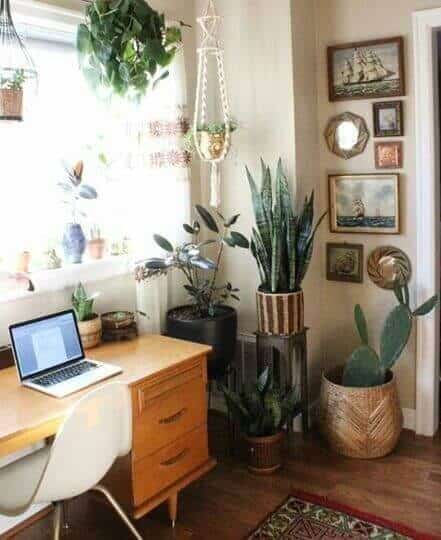
#3 Cozy Home Office With Lush Potted Plants And Natural Light
A wooden desk by the bright window creates an inviting workspace, complemented by a contemporary white chair. Incorporating home office plants like a snake plant adds life and improves air quality. The warm tones of the wooden flooring harmonize beautifully, making this setup cozy and efficient for productivity and relaxation.
Consider varying plant heights for visual interest. This biophilic design not only enhances aesthetics but also brings nature indoors, fostering a calming atmosphere perfect for focused work.

#4 Vibrant Air Plants Nestled in a Glass Terrarium with Pebbles
Creating a terrarium is a delightful way to introduce greenery into your office space. The vibrant air plants and decorative pebbles offer a structured yet organic aesthetic. I suggest placing it on your desk to enhance your workspace while improving air quality. It serves as a charming focal point and a reminder of nature indoors.
Consider using low-light plants like the peace lily or snake plant for a harmonious office environment. They thrive in various lighting conditions and add a refreshing touch to your home office decor.

#5 Cylindrical Terrarium Showcasing An Air Plant With Decorative Stones
The terrarium, with its sleek glass design, brings a touch of nature indoors. An air plant, surrounded by smooth stones and rich soil, creates a calming vibe. For your office plants ideas, consider incorporating such a minimalist piece to enhance your workspace and promote a serene atmosphere. It’s a simple yet effective way to breathe life into your decor.
The layered textures and natural elements in this terrarium can inspire you to choose easy house plants that thrive in various lighting conditions. Each plant adds character, making your home office feel inviting and fresh while boosting productivity.

#6 Stylish Office Arrangement Featuring Indoor Plants And Art Prints
Transforming your office space with indoor plants can truly elevate your environment. The combination of framed botanical prints and a sturdy white cabinet creates a fresh, modern aesthetic. I find that incorporating low-light plants like a rubber plant or peace lily not only enhances decor but also boosts your mood and productivity.
Consider placing these plants near your workspace. They thrive in various conditions while adding a vibrant touch to your home office. Using greenery as office decor can create a calming green space that inspires creativity and focus.

#7 Minimalist Home Office Featuring Lush Greenery And Vibrant Tulips
A sleek, white desk paired with vibrant indoor plants creates a tranquil workspace. I love how cascading greenery and colorful tulips add life to the minimalist decor. To enhance your home office decor, consider placing easy-care plants like a snake plant or peace lily for a refreshing touch. They’ll brighten your environment and boost productivity.

#8 Lush Potted Plant Elevates Cozy Corner With Textured Decor
A tall, lush potted plant can completely transform your space, bringing in height and life. Pair it with a textured basket and a cozy throw to enhance your office decor. For a refreshing touch, consider adding low-light plants like a ZZ plant or snake plant. They thrive even in less sunny spots.

#9 Tall Green Plants Brighten A Minimalist Office Space Near Windows
Arranging three tall, slender green plants in white pots along a wide sill creates a fresh, inviting atmosphere. Their placement by a large window ensures they thrive with natural light. Incorporating indoor plants not only enhances your office decor but also promotes a calming workspace. Consider adding more greenery for an even more vibrant feel.
The minimalist style complements modern decor beautifully, making your home office feel airy and open. Embrace the tranquility that plants bring; they can truly transform your environment into a green oasis.

#10 Bamboo Arrangements In Elegant Vases Enhance Office Spaces
Bamboo arrangements add a fresh touch to any office space. The sleek glass vases filled with decorative pebbles create a modern aesthetic. For office plants ideas, consider placing these arrangements near your workspace to enhance your focus and bring nature indoors. They’re perfect for creating a serene environment while working.

#11 Minimalist Home Office With Shelving And Lush Office Plants
Creating a home office with a minimalist design feels refreshing. The light wood shelves filled with books and potted plants breathe life into the space. I love adding easy house plants, like trailing vines, to enhance that airy feel. It’s amazing how greenery can boost your mood and productivity. Natural light floods the room, making it inviting and warm. A modern desk paired with a comfortable woven chair invites you to settle in and focus. Consider incorporating a rubber plant or peace lily for easy care and vibrant decor. Embracing office plants ideas elevates your workspace beautifully.

#12 Indoor Plants Create A Calming Atmosphere In A Bright Office
Indoor plants can truly transform your workspace into a calming oasis. I love how the tall yucca palm and vibrant green shrub bring life to the well-lit corner. For your office plants ideas, consider mixing different textures in stylish pots to elevate the overall decor and create a refreshing atmosphere.
Adding plants like the peace lily or snake plant not only enhances aesthetics but also improves air quality. Choose low-maintenance options that thrive in natural light for a more inviting and productive home office environment.

#13 Cacti In Terracotta Pots Create A Minimalist Office Vibe
Cacti in terracotta pots add a unique touch to your workspace, creating a natural feel. The varying heights of the plants enhance visual interest, perfect for an office setting. For your office plants ideas, consider placing them near windows for optimal light, helping them thrive while brightening your space.
These drought-resistant plants are low-maintenance, making them ideal for busy professionals. Incorporating greenery like this not only improves air quality but also boosts your mood. A well-placed rubber plant or snake plant can enhance your overall office decor beautifully.

#14 Minimalist Home Office With Indoor Plants In Natural Wood Planter
A minimalistic home office can truly thrive with the right indoor plants. I love using a natural wood planter filled with easy house plants like the Peace Lily or Snake Plant. This not only enhances the workspace but also brings a refreshing touch of nature indoors. Consider how plants can elevate your office plants ideas. To create a bright and inviting atmosphere, ensure your office is well-lit. The combination of a light wood desk and polished concrete flooring can beautifully complement your choice of plants. Embrace this contemporary style to foster productivity and connection to nature.

#15 Modern Office Design Featuring A Tall Green Plant In A Black Pot
A tall green plant in a black pot can really transform your office space. It brings a refreshing touch of nature that pairs beautifully with the sleek, minimalist design of your workspace. Consider low-light plants like a ZZ plant or peace lily for easy care and vibrant greenery. Incorporating office plants ideas not only enhances aesthetics but also boosts productivity.

#16 Lush Indoor Plants In Rustic Planters Enhance Modern Office Space
Indoor plants create a warm, inviting atmosphere, and I love using them in office spaces. The rustic wooden planters enhance the organic feel, while the varying heights of the plants add visual interest. For a successful plant office aesthetic, choose low-maintenance options like the Peace Lily or Snake Plant to brighten your workspace effortlessly.
These plants not only look great but also improve air quality. Incorporating greenery into your environment can boost productivity and well-being. Consider placing them near windows for optimal light, making your home office a refreshing green space.
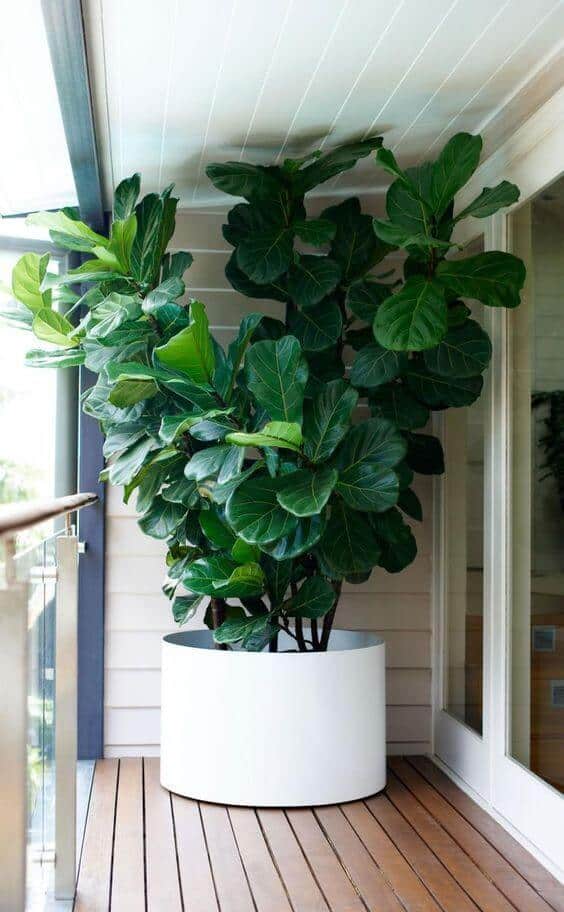
#17 Fiddle Leaf Fig in Sleek Planter Brightens Modern Office Space
The fiddle leaf fig in a sleek white planter adds a fresh touch to your office space. Its large leaves thrive in natural light, creating a lively atmosphere. For your home office plants ideas, consider placing it near a window to enhance the vibrant feel. A bit of greenery can truly elevate your workspace.
This plant’s modern aesthetic pairs beautifully with textured wooden flooring. It not only serves as decor but also improves air quality. Bringing in easy house plants like this will make your home office feel more inviting and productive.

#18 Modern Office Space Enhanced With Lush Indoor Plants And Minimalist Design
Creating a workspace filled with greenery can truly enhance your productivity. Incorporating easy-care office plants like the Zz plant or Peace Lily not only brings life to your area but also improves air quality. A well-placed snake plant can thrive in low light, making it perfect for any corner. Consider these office plants ideas to elevate your space.

#19 Tall Snake Plant in Gray Pot Enhances Modern Office Space
The tall Sansevieria, or snake plant, adds height and elegance to any office space. Its striking green leaves in a textured gray ceramic pot bring a refreshing vibe. I recommend placing it near natural light for optimal growth, as indoor plants like this enhance the overall ambiance and promote a healthier workspace.
Consider pairing it with a floating wooden shelf for additional depth. A glass vase with an orchid can add a touch of sophistication. These simple home office plants ideas help create a serene environment that fosters productivity and creativity.

#20 Modern Concrete Planter With Succulent Enhancing Minimalist Workspace
The concrete planter with a succulent adds an earthy touch to your workspace. I love how the textured pot contrasts with the sleek wooden tabletop, creating a modern vibe. For office plants ideas, consider adding more greenery like snake plants, which thrive in low light. They enhance air quality and bring a refreshing feel to your home office. Incorporating indoor plants is a simple way to transform your space. A glass spray bottle next to your plants can help remind you to care for them regularly. This nurturing aspect not only beautifies your environment but also boosts your mood while you work.

#21 Cascading Green Vines in Ceramic Planters Enhance Office Space
Hanging plants add a lively touch to your office space, transforming it into a green sanctuary. I love using ceramic planters suspended by natural fiber ropes, which create a cascading effect. Consider incorporating low light plants for an effortless aesthetic that enhances your indoor environment while promoting a calming atmosphere. Office plants ideas can truly elevate your workspace.

#22 Vibrant Succulent Arrangement In A Shallow Ceramic Pot
Creating a vibrant succulent arrangement can transform your office space into a refreshing oasis. The fleshy plants in various colors, paired with a round ceramic pot, make for a stunning focal point. To enhance your office plants ideas, consider placing them in well-lit areas for optimal growth and visual appeal. A mix of upright and trailing varieties adds depth and interest. This low-maintenance decor not only beautifies your workspace but also brings a touch of nature indoors, fostering a calming atmosphere.

#23 Modern Snake Plant Arrangement In A Sleek Black Planter
The tall, rectangular planter filled with snake plants brings a refreshing vibe to your office space. Their vibrant green leaves contrast beautifully against the solid black container and smooth gray stones. For a cozy feel, consider placing this planter near a bright window, enhancing your workspace with natural elements. Office plants ideas like this can truly elevate your decor.
Adding greenery not only beautifies your surroundings but also improves air quality. Snake plants are especially low-maintenance, making them perfect for busy home offices. Incorporating such plants creates a serene atmosphere that fosters productivity and well-being.

#24 Succulents In Textured Pots Bring Natural Charm To Your Office
Arranging succulents in textured pots adds a modern touch to any workspace. I love how the white ceramic and glossy finishes highlight the vibrant greens. For office plants ideas, consider using easy-care varieties like a rubber plant or snake plant to enhance your space effortlessly. They thrive indoors while boosting your mood.
This minimalist aesthetic not only beautifies but also creates a calming atmosphere. Incorporating plants into your office decor can refresh the air and improve focus, making your workspace more inviting and productive.

#25 Lush Green Office Plants In Modern Black And White Pots
The combination of matte black and glossy white plant pots adds a stylish touch to your space. Elevating these pots on natural wood legs creates a beautiful contrast against the light wooden floor. For a vibrant office plants idea, consider adding lush greenery like a Peace Lily or Snake Plant to enhance your workspace’s decor.
Incorporating plants in your office is a great way to bring nature indoors. Easy-care options like a Rubber Plant or ZZ Plant can thrive even in low light, making them perfect choices for your home office. These green accents not only beautify the space but also boost your mood and productivity.
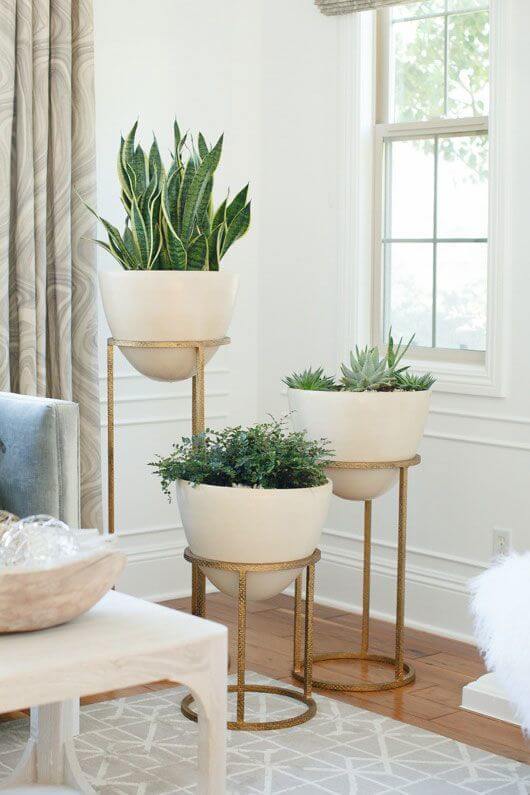
#26 Minimalist Office Plants In Elegant Gold Stands Adding Greenery
I love how the snake plant stands tall, bringing a fresh vibe to your home office. The minimalist pots on gold stands create an elegant touch that enhances your space. Consider using low-maintenance office plants to keep the decor lively without overwhelming your routine. Indoor plants can truly transform any workspace into a serene green space.

#27 Hanging Terrariums Cascade Against Exposed Brick Wall
Hanging terrariums add a unique touch to your office space, with glass globes showcasing vibrant air plants. The cascading design against a light-colored wall creates an inviting atmosphere. For an organic feel, consider placing them near windows for natural light. This is a great way to incorporate office plants ideas into your decor.
The varying sizes of the globes enhance visual interest and complement your workspace. Choosing easy care plants like air plants ensures low maintenance. These arrangements not only beautify but also create a refreshing green space that boosts productivity.

#28 Lush Office Plants Bring Life To A Modern Workspace With Warm Tones
Creating a home office filled with greenery transforms your workspace into a refreshing retreat. Incorporating plants like the snake plant or peace lily not only enhances the decor but also boosts your mood. Low-light plants thrive in these environments, making them perfect for an inviting office atmosphere. Embrace these office plants ideas to cultivate a vibrant green space.

#29 Lush Indoor Plants Enhance A Modern Corridor With Minimalist Style
Lush greenery can transform your office space beautifully. Placing large indoor plants like a rubber plant or peace lily in sleek black planters adds a modern touch while enhancing your workspace. These low light plants not only purify the air but also create a calming environment, making your office feel more inviting. To maximize the benefits of your office plants, consider their placement carefully. Ensure they receive the right amount of light while maintaining a minimalist aesthetic. A well-chosen plant can bring a refreshing vibe to your workspace, elevating both your mood and productivity.

#30 Lush Green Wall Enhances Modern Dining Room With Light Wood Table
The contemporary dining room feels inviting with its light wooden table and minimalist white chairs. A living green wall adds a refreshing touch, making it perfect for office plants ideas. Consider incorporating easy house plants like snake plants to enhance the atmosphere and bring nature indoors. The polished concrete floor complements the bright, airy feel beautifully.
Placing plants near windows can boost productivity and create a calming environment. Try choosing low light plants for areas with less sunlight, ensuring your home office remains vibrant and lively throughout the day.

#31 Fiddle Leaf Fig Adds Vibrancy Near Glass Partition In Cozy Space
The Fiddle Leaf Fig stands tall in a white, round planter, adding a vibrant touch to your space. Its glossy leaves thrive near the glass partition, enhancing natural light. Consider placing it in a cozy corner to create a refreshing office atmosphere. Incorporating such plants can truly elevate your office plants ideas.
With its modern aesthetic and inviting vibe, this plant not only beautifies but also encourages air circulation. Using a large, leafy plant like this makes your workspace feel more connected to nature, promoting a calming environment.

#32 Succulent Terrariums With Layered Soil And Decorative Rocks
Succulent terrariums are a beautiful way to incorporate life into your office space. The clear glass showcases the layered soil and pebbles, creating a modern aesthetic. For an effortless touch, choose low-maintenance plants like Echeveria or Aloe. These arrangements not only enhance your decor but also bring a calming nature indoors.
Arranging these terrariums on your desk or a shelf can transform your workspace. The contrasting textures of the soil and pebbles add depth. Embrace the office plants ideas to create a green oasis that boosts your mood and productivity.
Inspiring Office Plants Ideas to Elevate Your Workspace
Adding greenery to your workspace can boost productivity by up to 15% while improving air quality and mood. The right plants transform any office into a healthier, more inviting environment where you can actually enjoy spending your workday.
Top Office Plants for Every Setting
Snake plants are my go-to recommendation for any office setting. You can place them in corners, on desks, or next to filing cabinets. They survive weeks without water and handle low light conditions better than most plants.
ZZ plants work perfectly in windowless offices or cubicles. I’ve seen these tough plants thrive in spaces where other greenery fails. Their glossy leaves stay green even when you forget to water them for two weeks.
The peace lily offers beautiful white blooms that brighten up conference rooms and reception areas. These plants actually tell you when they need water by drooping slightly. You’ll find them bouncing back within hours of watering.
Pothos vines create stunning displays on bookshelves or hanging planters. They grow quickly and adapt to different light levels. You can trim them back whenever they get too long and use the cuttings to grow new plants.
Low Light and Easy-Care Varieties
Cast iron plants earn their name by surviving almost anything you throw at them. They tolerate low light, irregular watering, and temperature changes. I’ve placed these in hallways and interior offices where nothing else would grow.
The Chinese evergreen comes in various colors and patterns. You only need to water it once a week. It filters toxins from the air while adding visual interest to your desk or credenza.
Lucky bamboo grows in water, which means you never need to deal with soil or repotting. You just change the water every few weeks. These plants fit perfectly on small desks or narrow shelves.
Parlor palms bring a tropical feel to your workspace without demanding much attention. They grow slowly and stay compact. You can place them on tables or in floor planters near your desk.
The rubber plant handles neglect better than most office plants. Its thick, waxy leaves store water for extended periods. You’ll appreciate how it grows upward rather than spreading out, saving valuable desk space.
Creative Plant Office Decor Tips
Group plants at different heights to create visual depth. I arrange tall snake plants on the floor, medium-sized pothos on shelves, and small succulents on my desk. This layered approach makes your workspace feel fuller without cluttering it.
Use decorative planters that match your office aesthetic. Modern white ceramic pots suit minimalist spaces, while woven baskets add warmth to traditional offices. You can even paint terracotta pots to match your brand colors.
Create a living wall using mounted planters or a vertical garden system. This works especially well in home offices where you have more freedom to modify walls. Small pothos or philodendron plants fill in quickly.
Place plants near your computer monitor to reduce eye strain. The greenery gives your eyes something natural to focus on during screen breaks. I keep a small peace lily within arm’s reach for this exact reason.
Propagate cuttings in clear glass containers to add interest to your workspace. Watching roots develop creates a living science display. You can line up several glass jars on a windowsill or shelf.
Home Office Plants and Decorating Ideas
Your home office lets you experiment with bigger, bolder plants. I keep a large rubber plant in the corner that reaches five feet tall. It defines the workspace and separates it from the rest of the room.
Desk arrangements should include at least one small plant within your direct line of sight. A Chinese evergreen or small snake plant fits perfectly next to your keyboard or lamp. You’ll glance at it throughout the day, which helps reduce stress.
Create a plant station on floating shelves above your desk. Mix trailing plants like pothos with upright varieties like ZZ plants. This transforms blank wall space into a focal point.
Best indoor plants for home offices include varieties that improve air quality while you work. Spider plants, peace lilies, and snake plants all filter common household toxins. You breathe cleaner air during long work sessions.
Add a parlor palm near your video call background. The fronds create a professional, polished look on camera. Clients and coworkers will notice the fresh, put-together appearance of your space.
Place a lucky bamboo arrangement on your bookshelf or creditor. The vertical lines add structure to your decor. You can find these in various heights to fill empty spaces between books or decorative items.
Consider a plant office aesthetic that reflects your personal style. Minimalist spaces benefit from one or two statement plants in simple containers. Bohemian offices can handle multiple plants in varied textures and colors.
Frequently Asked Questions
Choosing the right plants for your office space involves understanding which varieties survive with minimal care, how to arrange them for maximum impact, and which ones work best in challenging conditions like low light or tight desk spaces.
What are some low-maintenance plants that would thrive in an office environment?
Snake plants top my list for busy office settings. You can forget to water them for weeks, and they’ll still look great. They handle low light better than most plants I’ve worked with.
Pothos plants are another winner. I’ve seen them survive in windowless conference rooms with only fluorescent lighting. They need water about once a week, and you’ll know when because their leaves start to droop slightly.
ZZ plants have thick, waxy leaves that store water. This means you only need to water them every two to three weeks. They grow slowly, so you won’t need to repot them often.
How can we best decorate our office space with plants to create a welcoming atmosphere?
Place larger floor plants in corners or next to seating areas where people gather. I’ve found that a tall fiddle leaf fig or dracaena instantly makes a space feel more inviting when clients walk in.
Group smaller plants in odd numbers on shelves or credenzas. Three or five plants together create visual interest without looking cluttered. Mix different heights and leaf textures for the best effect.
Use hanging planters near windows to draw the eye upward and make ceilings feel higher. Trailing pothos or string of pearls work beautifully in these spots. You can also mount plants on walls using special planters to save floor space while adding greenery at eye level.
Can you suggest some plants that are perfect for brightening up a small office space?
Succulents fit perfectly on cramped desks. I keep a small jade plant on my workspace, and it takes up less room than a coffee mug. These plants need bright light but very little water.
Air plants don’t even need soil. You can display them in glass terrariums or mount them on small pieces of driftwood. They only need a weekly soak in water for 20 minutes.
Mini African violets add color without taking up much space. They bloom regularly if you place them near a window. Their compact size makes them ideal for tight quarters, and their flowers come in purple, pink, and white.
Which indoor plants are known to effectively purify the air in office settings?
Spider plants remove formaldehyde and xylene from the air. I’ve placed these in offices with new carpet or furniture because they help reduce chemical odors. They produce baby plants that you can easily share with coworkers.
Peace lilies filter out benzene, formaldehyde, and trichloroethylene. They also tell you when they need water by drooping their leaves slightly. These plants prefer low to medium light, which makes them practical for most office spaces.
Boston ferns excel at removing formaldehyde and adding humidity to dry office air. They need more attention than other plants on this list because they like consistent moisture. Place them away from heating vents to prevent the fronds from drying out.
What types of plants are ideal for placing on an office desk, considering both aesthetics and space?
Lucky bamboo grows in water alone, so you don’t need to worry about soil spills on important papers. The straight stalks look clean and professional. You can find them arranged in different heights for visual interest.
Small cacti require almost no maintenance and add personality to your workspace. I’ve seen people choose varieties with interesting shapes or slight color variations. They need bright light, so place them near a window if possible.
Desk-sized pothos in a four-inch pot trail nicely without taking over your entire work surface. The heart-shaped leaves soften the hard edges of computers and office equipment. You can train the vines to grow along a bookshelf or let them cascade down naturally.
In offices with limited natural light, what are the best plant options that can still flourish?
Chinese evergreens survive in spaces with only fluorescent lighting. Their patterned leaves add visual interest even without much natural light. Water them when the top inch of soil feels dry.
Cast iron plants earned their name because they tolerate neglect and low light. I’ve seen them thrive in interior hallways with no windows. They grow slowly, which means less maintenance for you.
Philodendrons adapt to various light conditions, including dim offices. The heartleaf variety works particularly well in darker spaces. These plants grow quickly, so you’ll need to trim them occasionally to keep them from taking over your space.


